Introduction Okc Thunder vs Denver Nuggets Match Player Stats
The clash between the Okc Thunder vs Denver Nuggets Match Player Stats delivered everything basketball fans expect from a high-level Western Conference showdown. From fast-paced offensive possessions to physical defensive stands, this matchup highlighted why both franchises are considered serious contenders. The game unfolded with momentum swings, strategic adjustments, and individual brilliance that shaped the final outcome. Every quarter told a different story, and the detailed player stats reveal exactly how the contest was decided.
Okc Thunder vs Denver Nuggets Match Player Stats City entered the game with a youthful core focused on speed, perimeter scoring, and defensive pressure. Denver, meanwhile, relied on experience, ball movement, and efficient half-court execution. The statistical comparison between the two sides shows not only scoring numbers but also deeper metrics such as assists, rebounds, field-goal efficiency, and bench production that ultimately defined the match.
First Quarter Performance and Early Momentum
The opening quarter established the tone. Okc Thunder vs Denver Nuggets Match Player Stats City pushed the tempo immediately, attacking in transition and spreading the floor to create driving lanes. Their guards consistently penetrated the paint, forcing Denver’s defense to collapse and opening opportunities for perimeter shooters. The Thunder’s field-goal percentage in the first quarter reflected their aggressive mindset, as they converted high-quality looks early.
Okc Thunder vs Denver Nuggets Match Player Stats responded with patience. Instead of matching speed, they controlled possession length and utilized structured offensive sets. Crisp passing led to efficient mid-range and inside scoring. The Nuggets’ assist numbers in the first period demonstrated strong ball circulation, preventing defensive predictability. Rebounding on both ends also played a major role, limiting Oklahoma City’s second-chance opportunities.
Star Player Impact and Scoring Efficiency
Every elite matchup is defined by its stars, and this contest was no exception. For Okc Thunder vs Denver Nuggets Match Player Stats City, Shai Gilgeous-Alexander dictated the offensive rhythm. His scoring efficiency stood out, particularly from mid-range areas and at the free-throw line. Beyond points, his assist totals showed his ability to read double teams and find open teammates. He balanced shot selection with playmaking, contributing across multiple statistical categories including steals and defensive rebounds.
On Okc Thunder vs Denver Nuggets Match Player Stats side, Nikola Jokić once again demonstrated why he is regarded as one of the league’s most complete players. His stat line extended far beyond scoring. Points, rebounds, and assists combined into another near triple-double performance. His court vision allowed cutters and perimeter shooters to thrive, while his interior presence forced Oklahoma City to adjust defensive schemes. Efficiency from the field and calm decision-making in crucial possessions proved vital.
Backcourt Battle and Perimeter Shooting
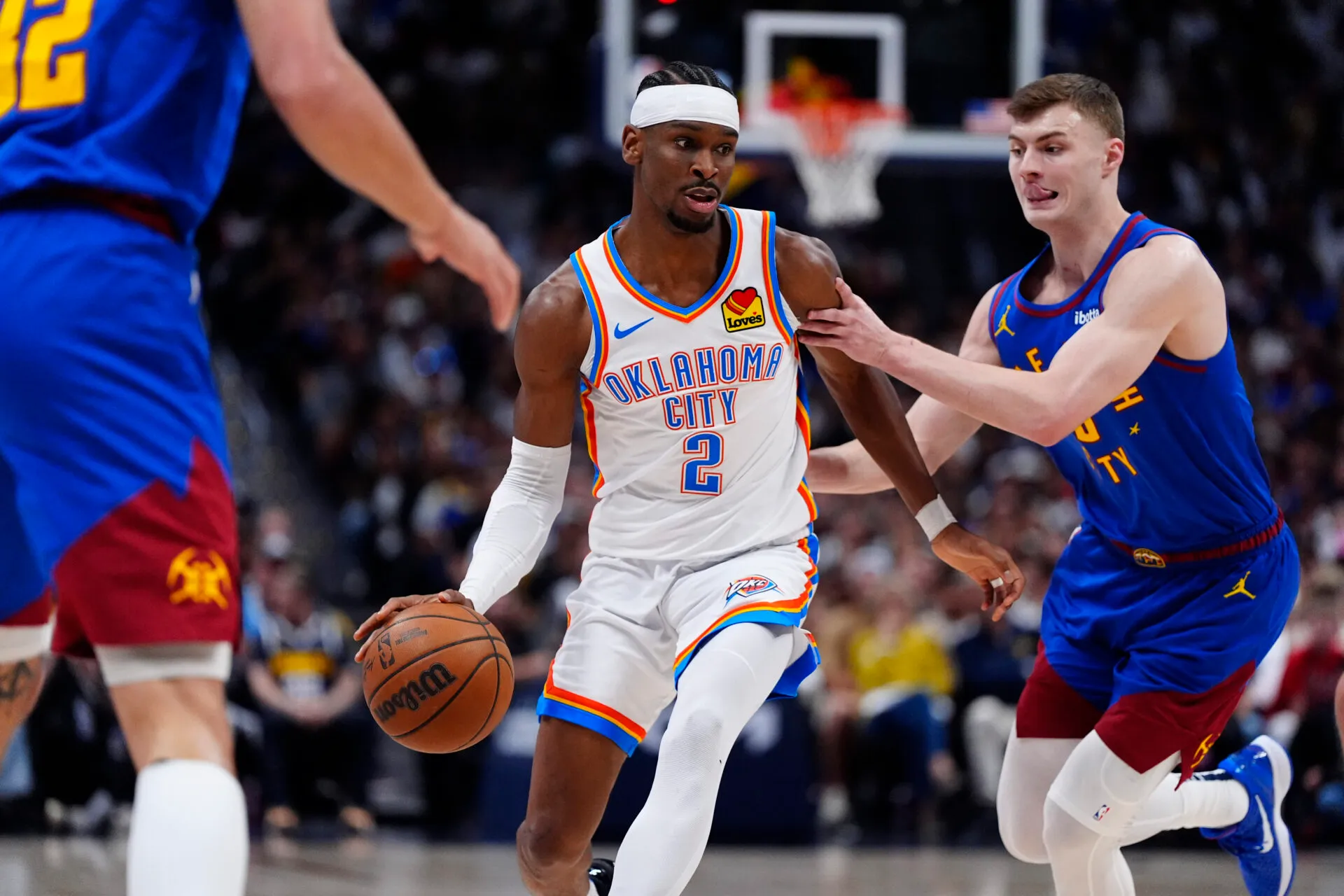 The guard matchup significantly influenced the overall statistics. Okc Thunder vs Denver Nuggets Match Player Stats backcourt relied heavily on penetration and kick-out threes. Their three-point attempts were high in volume, and while early success boosted confidence, consistency became a key factor in later quarters. Shooting percentages from beyond the arc directly impacted scoring runs and momentum swings.
Okc Thunder vs Denver Nuggets Match Player Stats countered with balanced perimeter production led by Jamal Murray, whose shot creation under pressure stood out. His ability to convert contested jumpers and create separation in isolation situations gave Denver a reliable scoring option late in the shot clock. Assist-to-turnover ratio from the Nuggets’ guards reflected disciplined execution compared to Oklahoma City’s occasional rushed possessions.
Frontcourt Contribution and Rebounding Numbers
Inside the paint, rebounding totals revealed an intense physical contest. Okc Thunder vs Denver Nuggets Match Player Stats City emphasized defensive rebounding to ignite fast breaks. Their forwards boxed out effectively in stretches, limiting second-chance points. However, Denver’s size advantage began to show as the game progressed. Offensive rebounds created additional scoring chances and extended key possessions during critical stretches.
Points in the paint statistics favored Okc Thunder vs Denver Nuggets Match Player Stats due to controlled post play and interior passing sequences. Oklahoma City relied more on slashing drives than traditional post-ups, which influenced shot distribution. The contrast in play styles was clearly visible in the stat sheet, especially in field-goal attempts from close range.
Bench Production and Rotation Depth
Bench scoring often determines tightly contested games, and this matchup was no different. Okc Thunder vs Denver Nuggets Match Player Stats City’s second unit provided energy and defensive intensity. Quick substitutions maintained pace and helped sustain scoring during brief rest periods for starters. Their bench points kept the scoreboard competitive and prevented large deficits.
Okc Thunder vs Denver Nuggets Match Player Stats rotation, however, showed composure and experience. Role players contributed timely three-pointers and defensive stops. Plus-minus statistics highlighted which bench players influenced momentum most effectively. Depth proved crucial late in the third quarter when fatigue began affecting defensive transitions.
Third Quarter Adjustments and Tactical Shifts
Halftime adjustments shifted the dynamic of the contest. Okc Thunder vs Denver Nuggets Match Player Stats City focused on reducing turnovers and improving shot selection. Ball movement improved compared to the first half, reflected in higher assist totals and fewer isolation attempts. Defensive rotations became sharper, limiting easy interior passes.
Okc Thunder vs Denver Nuggets Match Player Stats adjusted by slowing the pace further and attacking mismatches. Strategic pick-and-roll execution increased scoring efficiency. The Nuggets’ shooting percentage climbed during this period, supported by disciplined spacing. Statistical trends from the third quarter indicated a slight edge for Denver, largely due to improved rebounding control and efficient half-court offense.
Defensive Metrics and Turnover Battle
Defense played a decisive role in determining the winner. Okc Thunder vs Denver Nuggets Match Player Stats City generated multiple steals by applying perimeter pressure. Fast-break points off turnovers kept them competitive throughout the game. However, aggressive defense sometimes led to fouls, granting Denver valuable free-throw opportunities.
Okc Thunder vs Denver Nuggets Match Player Stats defensive approach focused on positioning rather than gambling for steals. Blocks and contested shots near the rim reduced Oklahoma City’s high-percentage attempts. Turnover comparison numbers revealed a slight advantage for Denver, particularly in the fourth quarter when decision-making under pressure became critical.
Fourth Quarter Clutch Performance
The final quarter delivered high drama. Both teams traded baskets, but shot selection became increasingly important. Oklahoma City leaned heavily on isolation scoring and quick drives. While this approach produced points, it occasionally limited ball movement.
Okc Thunder vs Denver Nuggets Match Player Stats maintained structured offense. Key possessions featured inside-out passing sequences that resulted in open perimeter looks. Free-throw accuracy during the final minutes proved decisive. Clutch-time shooting percentages and assist numbers highlighted composure differences between the two squads.
Individual stat lines in the fourth quarter showed elevated scoring from both primary stars. Defensive rebounds and minimal turnovers became crucial factors in protecting narrow leads. Execution under pressure ultimately separated the teams.
Complete Statistical Comparison and Final Insights
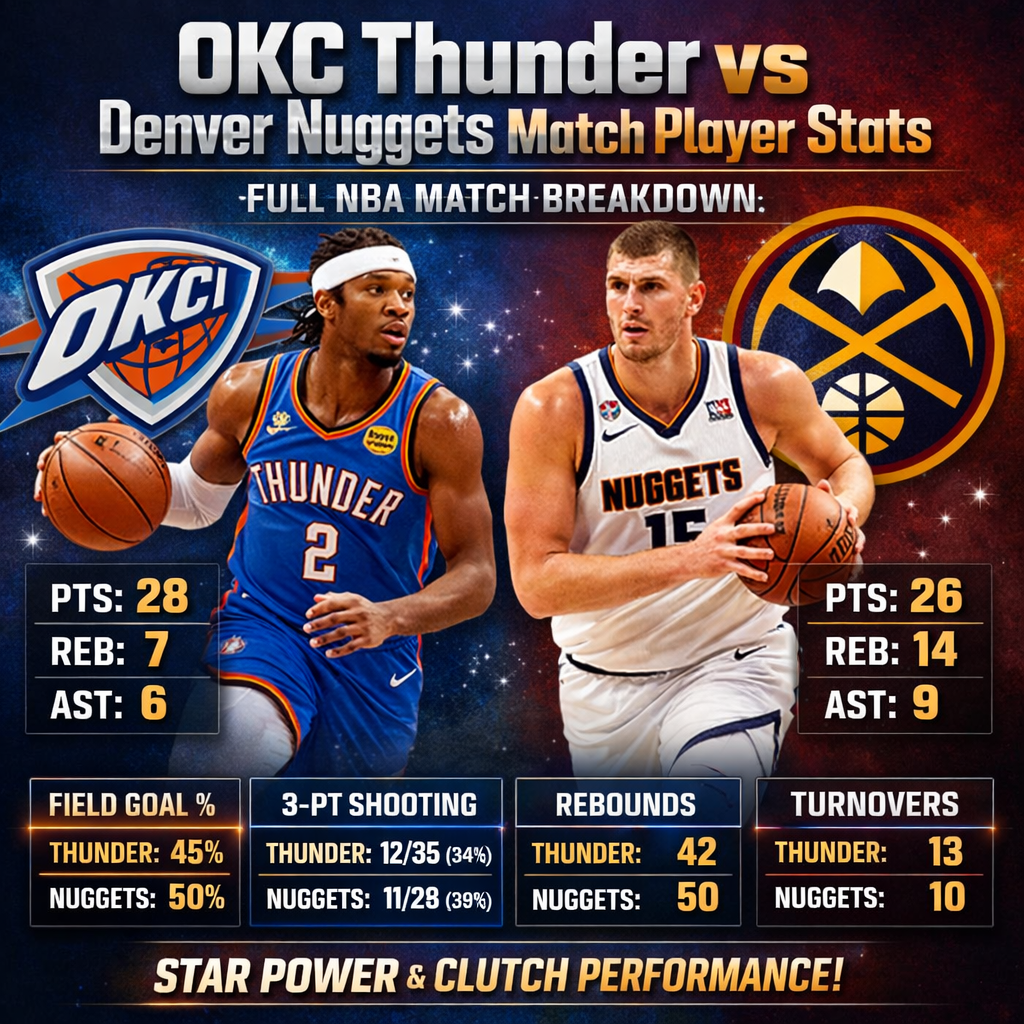
When analyzing total match player stats, several categories stand out. Field-goal percentage slightly favored Denver due to controlled shot selection and paint dominance. Three-point shooting volume favored Oklahoma City, though efficiency fluctuated. Rebounding totals leaned toward Denver, particularly offensive boards that created extra scoring chances.
Assist totals for both teams demonstrated strong ball movement, yet Denver’s assist-to-turnover ratio reflected greater efficiency. Points in the paint and second-chance points proved significant contributors to the final score. Free-throw attempts and accuracy also influenced momentum shifts in the closing minutes.
From an individual perspective, the star performances defined the narrative. Shai Gilgeous-Alexander’s scoring versatility and defensive activity kept Oklahoma City competitive. Nikola Jokić’s all-around production showcased elite basketball IQ and leadership. Jamal Murray’s clutch shot-making added the final layer of offensive stability for Denver.
Conclusion
The Okc Thunder vs Denver Nuggets Match Player Stats clearly show how small statistical differences can decide a high-level NBA game. Oklahoma City relied on speed, perimeter shooting, and aggressive defensive pressure to challenge their opponent throughout the contest. Their star players delivered strong scoring performances, and transition offense kept the tempo high from start to finish.
Okc Thunder vs Denver Nuggets Match Player Stats however, gained the edge through efficiency, interior dominance, and controlled execution in clutch moments. Strong rebounding numbers, smart shot selection, and disciplined ball movement allowed them to maximize each possession. In particular, the all-around impact of Nikola Jokić once again proved decisive, as his scoring, playmaking, and rebounding shaped the flow of the game.
You Many Also Read Here: Miami Heat vs Memphis Grizzlies Match Player Stats