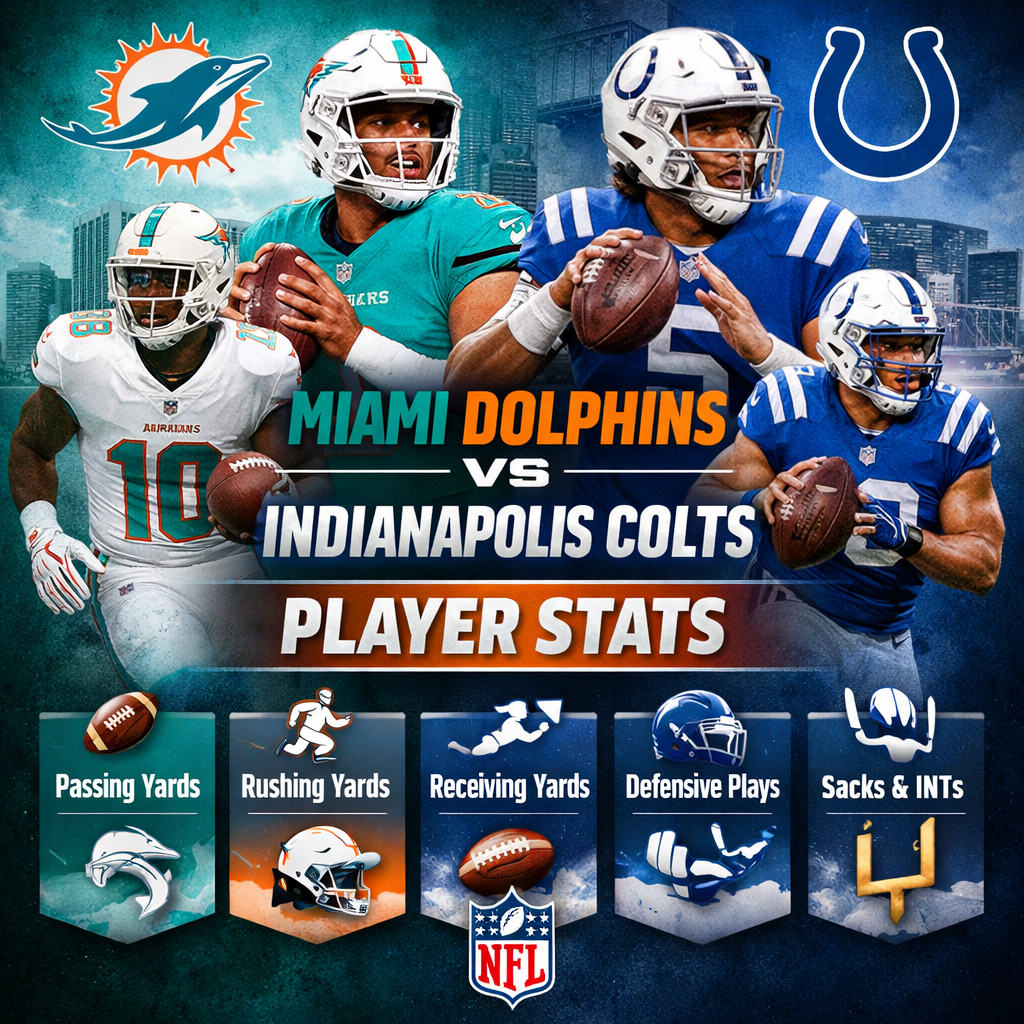
Introduction Miami Dolphins vs Indianapolis Colts Match Player Stats
The clash between the Miami Dolphins vs Indianapolis Colts Match Player Stats delivered an intense NFL battle defined by explosive offensive drives, calculated defensive stops, and standout individual performances. Both teams entered the matchup with playoff ambitions, making every snap critical. The player stats from this contest highlight the strategic differences between Miami’s speed-focused attack and Indianapolis’ balanced, physical approach. From quarterback efficiency to defensive pressure rates, the numbers tell a detailed story of momentum swings and tactical execution.
Quarterback Performance and Passing Efficiency
Quarterback play shaped the rhythm of the game. Tua Tagovailoa showcased sharp accuracy and timing, completing a high percentage of his passes while efficiently spreading the ball across multiple targets. He demonstrated strong pocket awareness, limiting sacks and avoiding costly turnovers. His passer rating reflected disciplined decision-making, particularly on third downs where he converted key opportunities to sustain drives.
On the opposing side, Anthony Richardson displayed a dual-threat dimension that added complexity to Miami Dolphins vs Indianapolis Colts Match Player Stats defensive schemes. Richardson combined solid passing yardage with impactful rushing gains, extending plays with mobility. His completion rate showed improvement under pressure, and his ability to attack vertically stretched the Dolphins’ secondary. Although he faced moments of defensive containment, his total yardage contribution underlined his growing impact as a franchise quarterback.
Running Game Analysis and Ground Production
The rushing battle revealed contrasting philosophies. Miami Dolphins vs Indianapolis Colts Match Player Stats utilized quick outside runs and misdirection to create space, resulting in consistent yardage gains. Their running backs averaged strong yards per carry, capitalizing on perimeter blocking and fast-paced tempo. Red-zone efficiency improved when the Dolphins leaned on short-yardage runs to complement their passing game.
For Miami Dolphins vs Indianapolis Colts Match Player Stats power running was central. Jonathan Taylor delivered a performance marked by physicality and vision. His rushing totals included multiple explosive gains, particularly in the second half when the Colts emphasized ball control. Taylor’s yards after contact demonstrated resilience, while his involvement in the passing game added versatility. Time-of-possession statistics favored the Colts during sustained drives fueled by his ground production.
Wide Receiver and Tight End Contributions
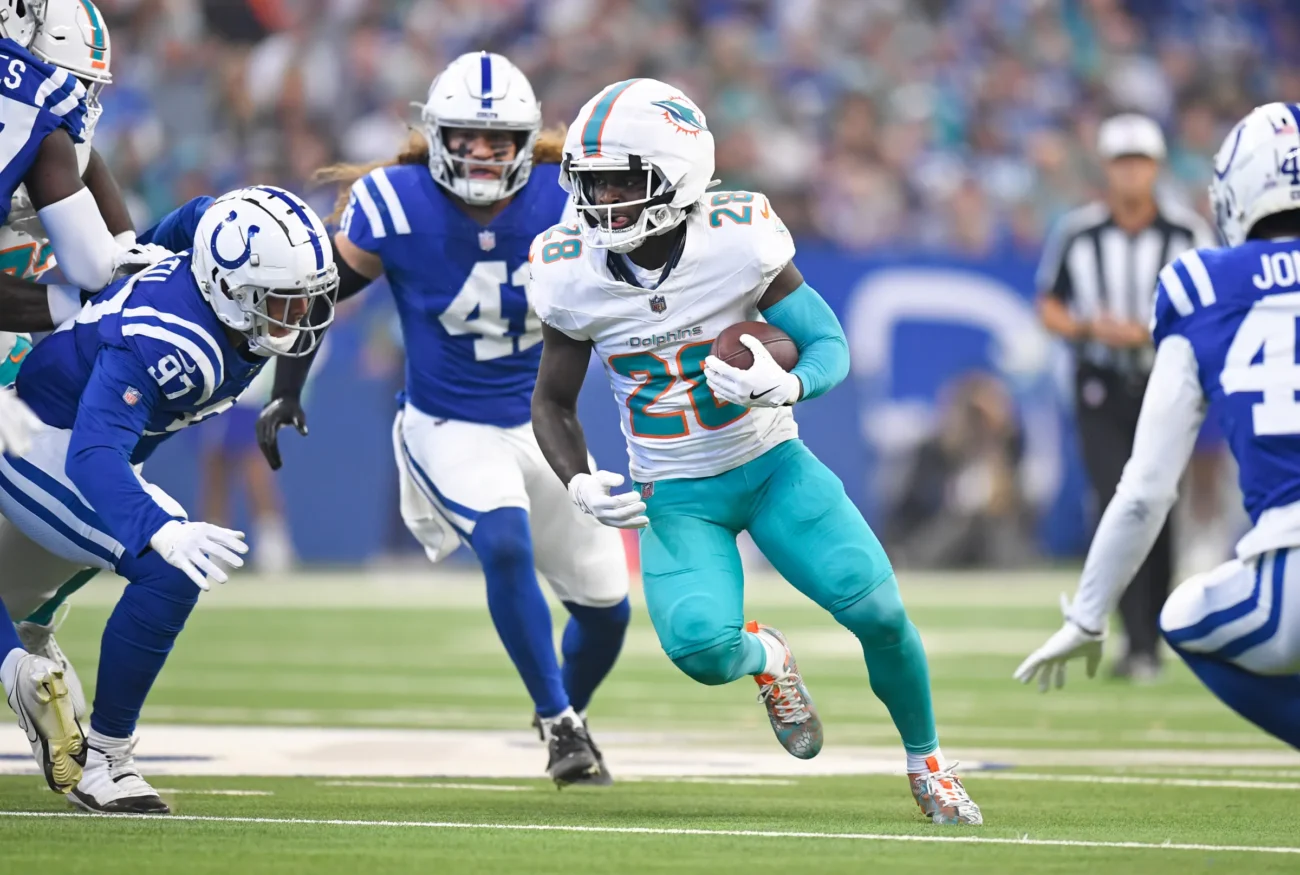 The Miami Dolphins vs Indianapolis Colts Match Player Stats receiving corps once again proved why speed defines their offensive identity. Tyreek Hill led in receiving yards, consistently creating separation with acceleration and precise route running. His yards-after-catch numbers were especially impressive, turning short completions into significant gains.
Complementing him, Jaylen Waddle added reliable hands and intermediate-route efficiency. Together, they combined for a substantial portion of Miami’s total passing yards. Tight ends contributed in key third-down situations, providing safety-valve options that maintained drive momentum.
Miami Dolphins vs Indianapolis Colts Match Player Stats countered with balanced receiving production. Multiple targets shared receptions, reflecting a diversified passing strategy. The Colts’ tight ends were effective in short-yardage conversions, while their wide receivers capitalized on play-action opportunities created by the run game.
Defensive Standouts and Impact Plays
Defensively, both teams produced impactful moments that shifted momentum. Miami Dolphins vs Indianapolis Colts Match Player Stats pass rush generated pressure rates that disrupted timing routes and forced hurried throws. Edge rushers recorded sacks and quarterback hits that limited Indianapolis’ deep-play attempts. Linebackers contributed through disciplined coverage and timely tackles for loss.
The Miami Dolphins vs Indianapolis Colts Match Player Stats defensive front, anchored by DeForest Buckner, demonstrated interior dominance. Buckner’s tackles and quarterback pressures disrupted Miami’s rhythm in the second quarter, collapsing the pocket and forcing adjustments. Indianapolis’ secondary recorded pass breakups and an interception that temporarily shifted field position advantage. Defensive third-down efficiency metrics indicated the Colts’ ability to contain high-pressure situations.
Turnovers, Penalties, and Game-Changing Moments
Turnover differential played a pivotal role. Miami Dolphins vs Indianapolis Colts Match Player Stats maintained ball security for most of the contest, minimizing interception risk. Indianapolis capitalized on one critical takeaway that set up a short-field scoring opportunity. Penalty yards slightly favored the Dolphins, as fewer infractions allowed them to maintain offensive continuity.
Special teams also influenced momentum. Field position battles, punt return averages, and kickoff coverage efficiency shaped starting drive locations. A long return in the third quarter sparked a scoring drive that narrowed the point margin and intensified competition.
Third-Down and Red-Zone Efficiency
Statistically, third-down conversion rates offered insight into offensive consistency. Miami Dolphins vs Indianapolis Colts Match Player Stats converted a higher percentage through quick slant routes and strategic play-calling. Their red-zone touchdown percentage demonstrated improved finishing ability compared to earlier performances in the season.
Miami Dolphins vs Indianapolis Colts Match Player Stats showed resilience by converting several third-and-medium situations, largely through balanced play-calling. In the red zone, their reliance on power runs and tight-end targets produced touchdowns but also resulted in one stalled drive ending in a field goal. These efficiency metrics ultimately influenced the final scoring margin.
Time of Possession and Drive Breakdown
Time-of-possession statistics reflected Miami Dolphins vs Indianapolis Colts Match Player Stats methodical approach, particularly during second-half drives. Sustained possessions kept Miami’s offense off the field and reduced tempo opportunities. However, Miami’s quick-strike capability allowed them to score in fewer plays, demonstrating efficiency over duration.
Drive summaries revealed contrasting patterns: Miami’s scoring drives averaged fewer plays but covered substantial yardage, while Indianapolis relied on extended sequences built around consistent short gains. Both strategies yielded points, but explosive plays provided Miami with a slight statistical edge in total yardage.
Coaching Strategy and Tactical Adjustments
Coaching adjustments were evident in halftime stat shifts. Miami Dolphins vs Indianapolis Colts Match Player Stats altered protection schemes to counter interior pressure, leading to improved second-half passing efficiency. Screen plays and quick-release passes reduced sack exposure.
Miami Dolphins vs Indianapolis Colts Match Player Stats adjusted defensive coverage, incorporating zone looks that limited deep threats. Offensively, they emphasized play-action passes following successful rushes, generating chunk plays that balanced their yardage distribution. These tactical changes were mirrored in quarter-by-quarter statistical improvements.
Comparative Team Stats and Overall Numbers
Total offensive yardage slightly favored Miami due to explosive passing gains. Passing yards per attempt highlighted their downfield efficiency. Rushing totals were competitive, with Indianapolis marginally ahead in yards after contact.
Defensively, both teams recorded multiple sacks and tackles for loss. Interception and forced fumble statistics indicated disciplined coverage and ball-stripping techniques. Penalty counts and average starting field position further contextualized the final outcome.
When evaluating advanced metrics such as quarterback rating under pressure, yards per play, and defensive stop rate, Miami Dolphins vs Indianapolis Colts Match Player Stats maintained a narrow statistical advantage. However, Indianapolis demonstrated stronger physical dominance in short-yardage scenarios.
Key Player Matchups That Defined the Game
Individual battles shaped the statistical landscape. Miami Dolphins vs Indianapolis Colts Match Player Stats receivers versus Indianapolis’ cornerbacks determined explosive play frequency. The trench battle between offensive linemen and defensive tackles influenced rushing efficiency. Linebacker coverage against tight ends impacted third-down conversion rates.
Quarterback mobility also factored into defensive containment strategies. Miami adjusted spy coverage to limit scrambling gains, while Indianapolis mixed blitz packages to challenge pocket stability. These micro-matchups collectively defined yardage totals and scoring opportunities.
Final Statistical Reflection and Performance Summary
The Miami Dolphins vs Indianapolis Colts match player stats reveal a contest driven by offensive explosiveness versus disciplined physicality. Miami’s edge in passing efficiency and big-play production contrasted with Indianapolis’ balanced yardage distribution and time-of-possession control. Quarterback performance, wide receiver productivity, and defensive pressure metrics formed the backbone of the statistical narrative.
Ultimately, the numbers illustrate how efficiency, ball security, and situational execution determine outcomes in high-stakes NFL matchups. From quarterback precision to defensive resilience, every player contribution was reflected in measurable performance data. For fans analyzing this matchup, the comprehensive player stats provide a clear picture of how strategy, skill, and adaptability converged on the field.
Conclusion
The Miami Dolphins vs Indianapolis Colts Match Player Stats ultimately showcased how modern NFL games are decided by efficiency, adaptability, and execution in critical moments. While both teams demonstrated impressive talent on both sides of the ball, the statistical breakdown reveals that small margins—third-down success, red-zone efficiency, turnover control, and explosive plays—made the biggest difference. Miami’s ability to capitalize on big passing gains and maintain offensive rhythm highlighted their dynamic identity, while Indianapolis’ balanced attack and physical ground game proved they can control tempo and dictate pace when needed.
Quarterback leadership, defensive pressure, and situational awareness were central themes throughout the contest. Individual performances translated directly into team momentum shifts, emphasizing how every drive and defensive stand carried weight. In high-level competition between the Miami Dolphins vs Indianapolis Colts Match Player Stats success is rarely about one single play—it is about consistent execution across four quarters.
You Many Also Read: Cleveland Browns vs Cincinnati Bengals Match Player Stats