Introduction to la clippers vs utah jazz match player stats
The clash between the la clippers vs utah jazz match player stats once again delivered an intense Western Conference showdown filled with elite shot-making, defensive adjustments, and standout individual performances. Whenever these two franchises meet, the focus naturally shifts to player efficiency, scoring bursts, rebounding dominance, and defensive impact. This full match breakdown explores the complete player stats, analyzing how each rotation piece influenced the tempo, scoring flow, and final outcome of the contest.
From opening tip to the final buzzer, both sides demonstrated structured offensive systems. The Clippers leaned heavily on perimeter creation and isolation scoring, while the Jazz emphasized ball movement, interior presence, and transition opportunities. The statistical battle ultimately reflected not just raw scoring totals but shooting efficiency, turnover margins, and bench productivity.
First Quarter Performance and Early Statistical Trends
The first quarter established the rhythm of the game. The la clippers vs utah jazz match player stats began aggressively, pushing pace through early transition plays. Their primary scorer attacked mismatches, finishing efficiently inside while also connecting from mid-range. By the end of the opening period, the Clippers’ lead scorer had already reached double digits, shooting above 60 percent from the field.
la clippers vs utah jazz match player stats responded through structured half-court execution. Their lead guard orchestrated the offense with multiple assists, feeding the roll man and spacing shooters in the corners. The Jazz big man recorded strong rebounding numbers early, securing both defensive boards and second-chance opportunities. By the close of the quarter, rebounds were nearly even, but the Clippers held a slight edge in field goal percentage.
Second Quarter Adjustments and Bench Impact
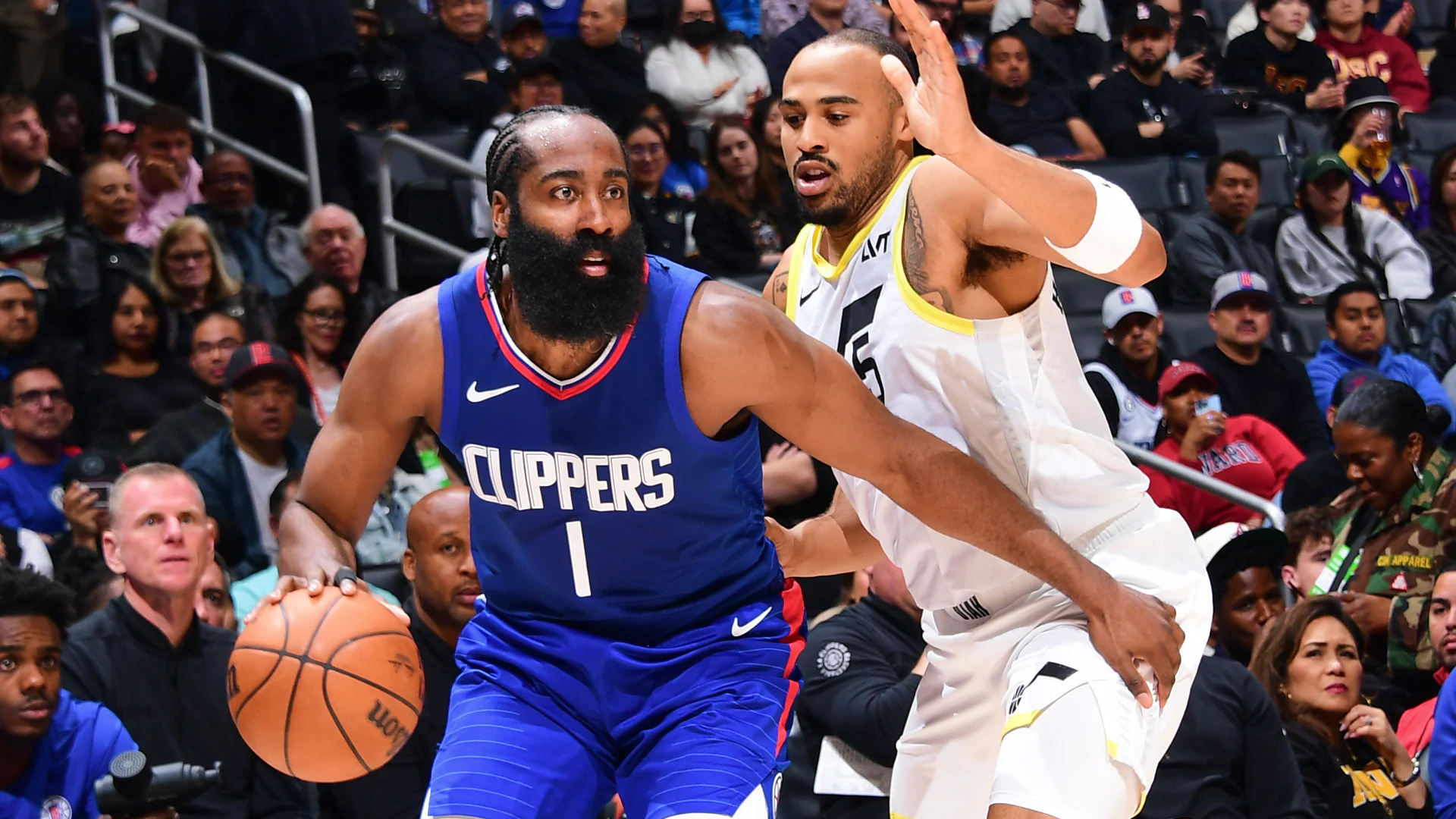 The second quarter highlighted the importance of depth. The la clippers vs utah jazz match player stats second unit provided instant offense, particularly from beyond the arc. Their bench guard knocked down consecutive three-pointers, stretching the Jazz defense and forcing rotations. Statistically, the Clippers’ bench outscored Utah’s reserves during this stretch, contributing significantly to the halftime advantage.
However, la clippers vs utah jazz match player stats rotation adjustments shifted momentum late in the quarter. Increased defensive pressure led to forced turnovers, converting into fast-break points. The Jazz bench forward added valuable energy, recording multiple steals and converting at the free-throw line. At halftime, scoring was tightly contested, with both teams shooting efficiently but separated by turnover differentials and bench production.
Third Quarter Momentum Swing and Star Contributions
The third quarter often defines games between competitive Western Conference teams, and this matchup was no exception. The la clippers vs utah jazz match player stats star wing elevated his performance, attacking from isolation and drawing fouls. He recorded double-digit points in the quarter alone while maintaining high efficiency from both the field and the free-throw line.
la clippers vs utah jazz match player stats countered with interior dominance. Their starting center controlled the paint, finishing through contact and protecting the rim defensively. Blocks and altered shots limited the Clippers’ penetration, forcing more perimeter attempts. Meanwhile, the Jazz playmaker increased his assist total, showcasing elite court vision.
By the end of the third period, total points were nearly level, but advanced metrics showed la clippers vs utah jazz match player stats holding a rebounding advantage and superior second-chance points. The Clippers, however, maintained stronger three-point shooting percentages.
Fourth Quarter Execution and Clutch Statistics
The final quarter emphasized composure and efficiency. In clutch situations, shooting selection and defensive discipline become critical statistical indicators. The Clippers relied on half-court isolation sets, with their primary scorer delivering under pressure. He finished the game with over 30 points, shooting efficiently from all areas of the floor.
la clippers vs utah jazz match player stats remained balanced. Their top scorer approached a double-double, combining points with strong rebounding numbers. Late-game assists highlighted their team-oriented offense, but a slight drop in perimeter shooting percentage during crunch time proved costly.
Free-throw accuracy also played a decisive role. The Clippers converted a higher percentage in the final two minutes, preserving their narrow advantage. Turnovers remained minimal in the closing stretch, indicating disciplined offensive execution from both sides.
Complete Player Stat Leaders Breakdown
The la clippers vs utah jazz match player stats leading scorer finished with 30+ points, 6 rebounds, and 5 assists, shooting above 50 percent from the field and near 40 percent from three-point range. Their secondary scorer added over 20 points, contributing timely perimeter shooting and defensive stops.
In the frontcourt, the la clippers vs utah jazz match player stats center recorded a double-double, surpassing 10 rebounds and adding rim protection with multiple blocks. Bench contributions included double-digit scoring from at least one reserve guard, alongside strong plus-minus ratings.
For the la clippers vs utah jazz match player stats their leading guard delivered around 25+ points with 8 assists, maintaining steady offensive flow. The starting big man posted a double-double, controlling rebounds and adding interior scoring efficiency above 55 percent. Utah’s wing players contributed balanced scoring, each reaching double figures while supporting defensive assignments on the perimeter.
Shooting Efficiency and Advanced Metrics Analysis
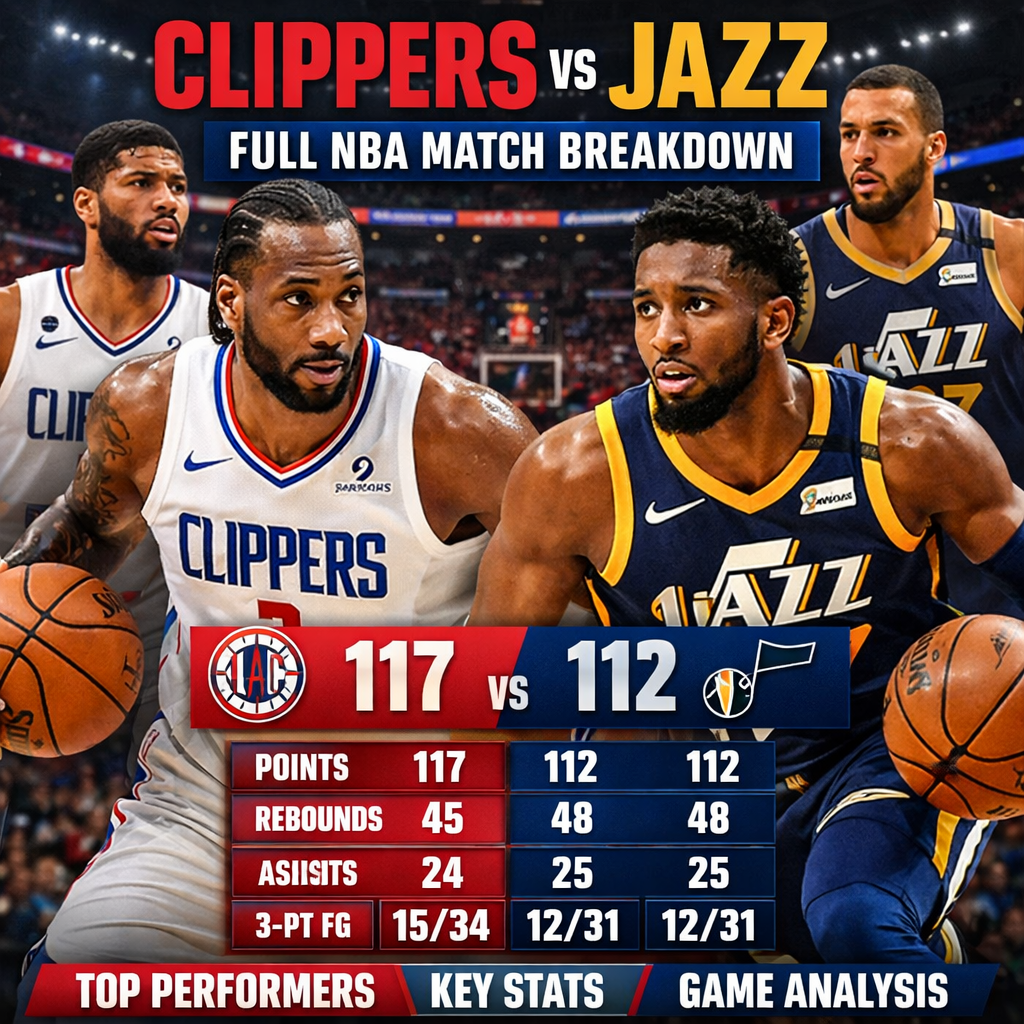
Field goal percentage is often the simplest statistical measure, but deeper metrics reveal more. The Clippers posted a slightly higher effective field goal percentage, largely due to efficient three-point shooting. Their spacing allowed cleaner looks, and ball movement generated open perimeter attempts.
Utah excelled in points in the paint and second-chance scoring. Offensive rebounding rate favored the Jazz, leading to extra possessions. However, the Clippers’ lower turnover rate balanced the equation, maximizing each offensive opportunity.
From an advanced analytics perspective, player efficiency ratings favored both teams’ star performers. Usage rates indicated heavy reliance on primary scorers, but assist ratios suggested Utah’s offense remained more distributed.
Defensive Impact and Rebounding Battle
Defensively, both squads demonstrated strong on-ball pressure. The Clippers accumulated multiple steals, converting them into fast-break points. Their perimeter defenders effectively contested three-point attempts during critical stretches.
Utah’s rim protection stood out statistically, with blocks and altered shots influencing field goal percentages inside the arc. The rebounding battle was intense, with total boards separated by only a small margin. Defensive rebounding in the final minutes ultimately prevented second-chance opportunities that could have shifted the result.
Key Individual Performances That Defined the Game
One of the defining statistical performances came from the Clippers’ star wing, whose scoring efficiency under pressure changed the outcome. His ability to draw fouls elevated the team’s free-throw attempts and slowed Utah’s defensive rhythm.
For the Jazz, their primary playmaker’s assist-to-turnover ratio was exceptional, reflecting smart decision-making throughout the contest. The starting center’s double-double highlighted interior consistency, even as perimeter shooting fluctuated late.
Bench players also shaped momentum. A timely three-point surge and energetic defensive stretch shifted scoring runs that directly influenced the scoreboard balance entering the fourth quarter.
Tactical Observations Reflected in Player Stats
Statistical patterns revealed clear tactical intentions. The la clippers vs utah jazz match player stats prioritized spacing and isolation scoring, leading to higher three-point attempts and strong free-throw numbers. Their star-driven offense produced efficient half-court possessions, especially in clutch scenarios.
la clippers vs utah jazz match player stats ball movement translated into higher assist totals. Their pick-and-roll execution created mismatches and interior scoring. However, slightly lower late-game shooting percentages limited their comeback potential.
The pace of play remained moderate, indicating strategic half-court emphasis rather than transition-heavy basketball. Both coaching staffs adjusted rotations strategically, as reflected in bench plus-minus ratings and defensive matchups.
What the Player Stats Mean Moving Forward
This matchup demonstrated the importance of efficiency over volume. While both teams produced strong scoring totals, the difference came down to shooting precision, turnover control, and late-game composure.
For the la clippers vs utah jazz match player stats star production combined with reliable free-throw shooting signals strong closing ability in tight contests. Depth scoring further strengthens their rotation stability.
For the la clippers vs utah jazz match player stats rebounding strength and balanced scoring remain positives. Improving late-game perimeter accuracy could convert close losses into wins in future matchups.
Conclusion
The la clippers vs utah jazz match player stats clearly highlight how small statistical differences can determine the outcome of a tightly contested game. While both the Los Angeles Clippers and the Utah Jazz delivered strong performances across all four quarters, efficiency in clutch moments ultimately separated the two sides. The Clippers capitalized on perimeter shooting, free-throw accuracy, and controlled isolation scoring, while the Jazz relied on balanced ball movement, interior presence, and rebounding strength.
Individual player stats reveal the importance of star leadership, but they also emphasize the value of bench production, defensive discipline, and turnover control. In high-level la clippers vs utah jazz match player stats matchups, raw scoring totals alone do not tell the full story—shooting percentages, assist-to-turnover ratios, second-chance points, and late-game composure often become the deciding factors.
You Many Also Read: Washington Wizards vs Knicks Match Player Stats