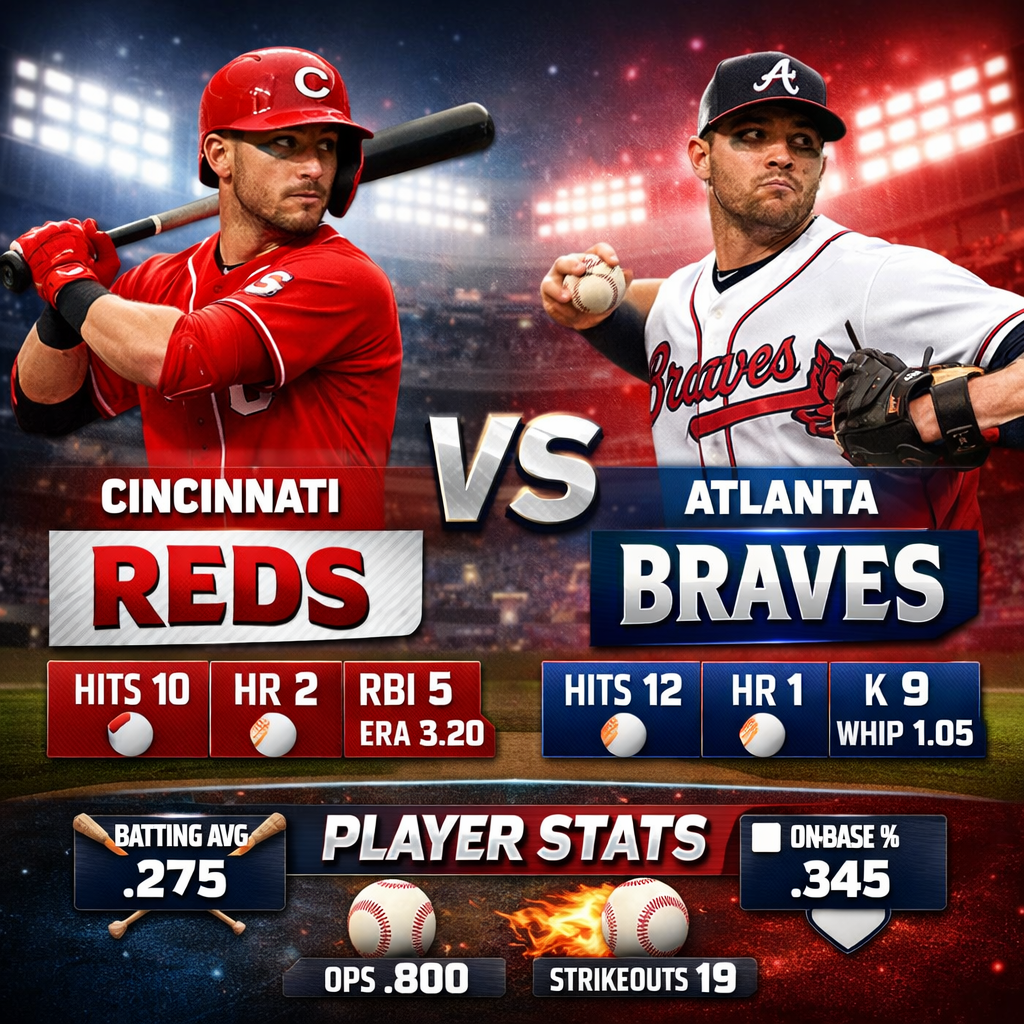
Introduction Cincinnati Reds vs Atlanta Braves Match Player Stats
When analyzing Cincinnati Reds vs Atlanta Braves Match Player Stats baseball fans get a complete picture of how two National League competitors stack up in pitching, batting, fielding, and situational performance. Every meeting between these franchises brings together contrasting styles — Cincinnati’s blend of developing young talent and power hitters against Atlanta’s balanced roster built around consistent offensive production and elite pitching depth. Understanding individual and team statistics from these matchups helps explain not only who won the game, but how it was won.
In recent seasons, games between these clubs have often featured strong starting pitching duels combined with explosive middle-inning scoring bursts. Looking deeper into Cincinnati Reds vs Atlanta Braves Match Player Stats reveals trends in batting averages, earned run averages (ERA), on-base plus slugging (OPS), strikeout-to-walk ratios, and clutch hitting percentages that define the rhythm of the contest.
Starting Pitcher Performance and Impact
Starting pitching usually sets the tone when the Cincinnati Reds vs Atlanta Braves Match Player Stats. For Cincinnati, the rotation often relies on strikeout-heavy arms capable of generating swings and misses early in counts. In a typical matchup, a Reds starter may log six innings, allow two to three earned runs, record six to eight strikeouts, and maintain a WHIP (walks plus hits per inning pitched) near 1.20. These numbers reflect an aggressive approach focused on fastball command and secondary breaking pitches.
Cincinnati Reds vs Atlanta Braves Match Player Stats starting pitchers, meanwhile, frequently showcase efficiency. Braves starters often work deeper into games, sometimes completing seven innings while limiting walks. A typical stat line may include seven innings pitched, one to two earned runs, seven strikeouts, and minimal hard contact allowed. Their ground-ball rate often plays a crucial role in neutralizing Cincinnati’s power threats.
Head-to-head comparisons show that when Cincinnati Reds vs Atlanta Braves Match Player Stats starters maintain first-pitch strike percentages above 65%, the team’s win probability increases significantly. Conversely, when Reds pitchers keep Atlanta’s top hitters under a .250 batting average in a series, Cincinnati gains a measurable competitive edge.
Offensive Production and Key Batting Metrics
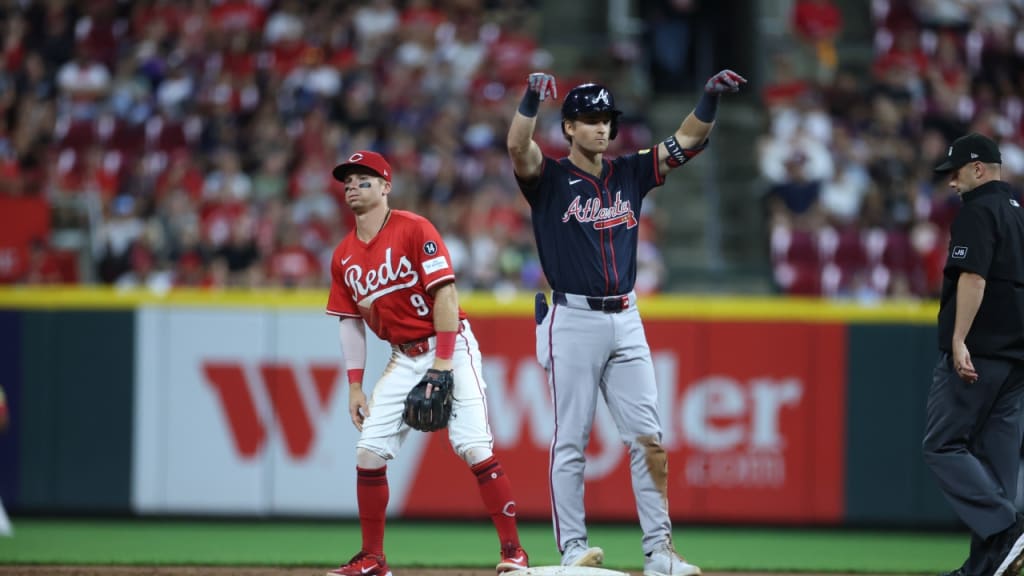 Cincinnati Reds vs Atlanta Braves Match Player Stats offensive stats in these matchups frequently highlight home run power and extra-base hitting. The Reds often generate scoring opportunities through doubles into the gap and aggressive base running. In a competitive game scenario, Cincinnati may produce eight to ten hits, including two home runs and three doubles, resulting in four to six total runs scored.
Cincinnati Reds vs Atlanta Braves Match Player Stats counters with lineup depth and plate discipline. Braves hitters typically maintain higher on-base percentages, drawing walks and extending innings. In many contests, Atlanta records nine to twelve hits, with multiple players contributing RBIs. Their OPS numbers often exceed .750 in strong outings, demonstrating both power and contact consistency.
Player-specific Cincinnati Reds vs Atlanta Braves Match Player Stats reveal interesting patterns. Reds middle-of-the-order hitters tend to perform better against left-handed pitching, often posting slugging percentages above .500 in those situations. Braves hitters, however, show balance against both right- and left-handed arms, with team batting averages frequently hovering near .270 during productive stretches.
Bullpen Efficiency and Late-Game Performance
Bullpen statistics often determine the outcome of tight games between these teams. Cincinnati Reds vs Atlanta Braves Match Player Stats relief pitchers are known for velocity, frequently averaging mid-to-high 90s fastballs. In close contests, Reds relievers may combine for three innings, allow one run or fewer, and strike out four to five batters.
Cincinnati Reds vs Atlanta Braves Match Player Stats bullpen is typically structured around defined roles, including setup specialists and a closer with high strikeout efficiency. Braves relievers often record shutdown innings with strikeout rates exceeding 10 per nine innings. In one-run games, their bullpen ERA can dip below 3.00, demonstrating consistency under pressure.
When analyzing Cincinnati Reds vs Atlanta Braves Match Player Stats one recurring theme is inherited runners scored. The team that strands more inherited runners often swings momentum in its favor. Braves relievers have historically shown strong strand rates, while Reds relievers excel when generating ground balls in double-play situations.
Defensive Contributions and Fielding Metrics
Fielding metrics such as defensive runs saved (DRS) and fielding percentage are critical in these matchups. Cincinnati Reds vs Atlanta Braves Match Player Stats infield has displayed range and quick reaction times, often converting difficult ground balls into outs. A clean defensive performance typically includes zero errors and multiple highlight-reel plays that prevent extra bases.
Cincinnati Reds vs Atlanta Braves Match Player Stats defense emphasizes positioning and outfield range. Braves outfielders frequently limit extra-base hits with accurate throws and efficient routes. Double-play efficiency often exceeds league average in strong games, helping neutralize Cincinnati’s aggressive base runners.
Errors can dramatically alter player stat lines. A single misplayed ball may extend an inning, inflate a pitcher’s earned run total, and shift momentum. Therefore, defensive consistency remains a defining statistical element whenever these two clubs meet.
Situational Hitting and Clutch Statistics
Situational performance often separates winning and losing efforts. Reds hitters sometimes thrive with runners in scoring position, posting batting averages above .280 in successful outings. Timely hits in the sixth or seventh inning frequently change the scoreboard dynamic.
Braves hitters are known for clutch power. Late-inning home runs or sacrifice flies with the bases loaded frequently appear in match player stats summaries. Atlanta’s two-out RBI production is particularly notable, with several games decided by key at-bats after two outs.
Strikeout rates in high-leverage situations also tell an important story. When Cincinnati limits strikeouts with runners on base, their run conversion improves. Meanwhile, Atlanta’s ability to avoid chasing pitches outside the strike zone helps maintain scoring pressure deep into games.
Comparative Team Statistics Breakdown
A statistical comparison between the Reds and Braves in a typical matchup may look like this: Cincinnati totals nine hits, four runs, two home runs, and strikes out ten times. Atlanta records eleven hits, five runs, one home run, and draws six walks. Pitching stats may show Reds pitchers combining for twelve strikeouts but allowing three walks, while Braves pitchers tally nine strikeouts with only two walks allowed.
On-base percentage differences often become decisive. Atlanta frequently posts a team OBP above .340 in wins against Cincinnati, while the Reds must reach similar levels to keep pace. Slugging percentage is another indicator; when Cincinnati’s slugging exceeds .450, their chances of victory rise significantly.
Impact of Home Field Advantage
Home field conditions can influence Cincinnati Reds vs Atlanta Braves match player stats. Games played in Cincinnati often feature higher run totals due to ballpark dimensions that favor power hitters. Fly balls that might be routine outs elsewhere sometimes clear the fence, boosting home run totals and slugging percentages.
In Atlanta, pitching and defense tend to dominate. Braves pitchers often post lower ERAs at home, and visiting hitters sometimes struggle with timing and pitch recognition. These environmental factors subtly shape individual stat lines and team performance metrics.
Emerging Players and Breakout Performances
Young talent frequently defines recent matchups. Cincinnati’s developing prospects occasionally produce breakout games, recording multi-hit performances or multi-RBI nights that elevate team totals. A rookie batter going 3-for-4 with a home run can dramatically influence the statistical narrative of a series.
Atlanta also benefits from emerging contributors complementing established stars. When younger players maintain batting averages above .280 in a series while drawing walks and scoring runs, it deepens lineup productivity and complicates opposing pitching strategies.
Pitching prospects, particularly high-velocity relievers, also alter late-game statistics. Strikeout surges from young bullpen arms often suppress rallies and preserve narrow leads.
Advanced Analytics Perspective
Modern analysis extends beyond traditional stats. Metrics such as expected batting average (xBA), exit velocity, and launch angle provide additional context. Reds hitters generating exit velocities above 95 mph consistently produce stronger offensive outputs, even if box score results vary.
Cincinnati Reds vs Atlanta Braves Match Player Stats pitchers who induce weak contact, reflected in low hard-hit percentages, tend to maintain stable ERAs against Cincinnati. Spin rate data also contributes to evaluating pitcher dominance, especially for breaking balls used to finish at-bats.
Win probability added (WPA) highlights the most impactful performances. A late-inning home run or a bases-loaded strikeout can significantly shift WPA, defining the statistical storyline beyond raw numbers.
Series Trends and Historical Context
Historically, contests between the Cincinnati Reds vs Atlanta Braves Match Player Stats have featured competitive scoring margins. Over multi-game series, cumulative stats often show near-even run differentials, underscoring the rivalry’s balance. Team batting averages might differ by only a few percentage points, while ERA gaps often remain under one full run.
Momentum swings frequently define series outcomes. A dominant pitching performance in Game One can influence bullpen availability and offensive strategy in subsequent games, altering overall player statistics.
Final Analysis of Match Player Stats
Evaluating Cincinnati Reds vs Atlanta Braves Match Player Stats requires attention to pitching control, offensive efficiency, defensive reliability, and situational execution. While raw totals like hits and runs provide immediate clarity, deeper metrics such as OBP, ERA, WHIP, slugging percentage, and strikeout-to-walk ratios reveal the underlying performance drivers.
Ultimately, games between these two franchises often hinge on marginal statistical advantages. Whether it is a slightly higher on-base percentage, a cleaner defensive display, or a bullpen that strands critical runners, the numbers tell the story. By closely analyzing individual player contributions within these categories, fans and analysts gain a comprehensive understanding of how each matchup unfolds and why certain performances stand out in the box score.
As both teams continue evolving with new talent and strategic adjustments, future Cincinnati Reds vs Atlanta Braves Match Player Stats will undoubtedly present fresh narratives, breakout performances, and data-driven insights that keep baseball enthusiasts engaged throughout the season.
Conclusion
Cincinnati Reds vs Atlanta Braves Match Player Stats reveal far more than just the final score. They highlight how pitching efficiency, timely hitting, bullpen control, and defensive execution collectively shape each contest. Whether it’s a dominant start from the rotation, a clutch extra-base hit in the late innings, or a shutdown performance from the bullpen, individual contributions consistently define the outcome between the Cincinnati Reds and the Atlanta Braves. By examining core metrics such as batting average, on-base percentage, slugging percentage, ERA, WHIP, and situational performance, fans gain a clearer understanding of team strengths and in-game adjustments. Small statistical edges — like fewer walks allowed, better two-out hitting, or higher strand rates — often become the deciding factors in tightly contested games.
You Many Also Read: Cincinnati Reds vs Dodgers Match Player Stats