
Introduction to Marketing Fundamentals
Marketing Fundamentals form the backbone of every successful business, whether it is a small startup or a global corporation. At its core, marketing is about understanding customer needs and delivering value in a way that builds strong relationships and drives sustainable growth. In today’s competitive digital landscape, mastering marketing fundamentals is more important than ever. Businesses that apply core marketing principles such as customer research, value creation, strategic positioning, and consistent communication are more likely to attract, convert, and retain loyal customers. By focusing on the essential elements of marketing, companies can create powerful strategies that generate brand awareness, increase sales, and establish long-term market presence.
Understanding the Core Concept of Marketing
The core concept of Marketing Fundamentals revolves around identifying customer needs and satisfying them profitably. Marketing is not just about selling products or services; it is about creating meaningful experiences that solve real problems. Successful marketing begins with thorough market research to understand customer behavior, preferences, and pain points. Businesses must analyze demographic, geographic, psychographic, and behavioral factors to build accurate customer profiles. By understanding their target audience, companies can develop products and services that deliver genuine value, which ultimately leads to higher customer satisfaction and brand loyalty.
The Importance of Customer Value and Satisfaction
Customer value is one of the most critical Marketing Fundamentals. It refers to the benefits customers receive compared to the cost they pay. When customers perceive high value, they are more likely to choose a brand over competitors. Delivering exceptional value requires a deep understanding of what customers truly want, whether it is quality, affordability, convenience, innovation, or emotional connection. Customer satisfaction goes beyond a single transaction; it builds trust and long-term relationships. Satisfied customers often become brand advocates who recommend products through word-of-mouth marketing, which remains one of the most powerful promotional tools.
Market Research and Consumer Behavior
 Effective Marketing Fundamentals strategies rely heavily on market research and consumer behavior analysis. Market research helps businesses gather data about market trends, competitor strategies, and customer preferences. Through surveys, interviews, focus groups, and data analytics, companies can make informed decisions rather than relying on assumptions. Understanding consumer behavior involves studying how individuals make purchasing decisions, what influences their choices, and how they respond to marketing messages. Psychological factors such as perception, motivation, beliefs, and attitudes play a major role in shaping buying behavior. Businesses that understand these factors can craft persuasive marketing campaigns that resonate with their target audience.
Segmentation, Targeting, and Positioning (STP)
Segmentation, targeting, and positioning are essential pillars of marketing fundamentals. Market segmentation involves dividing a broad market into smaller groups of consumers with similar characteristics. Targeting focuses on selecting the most profitable segments to serve. Positioning defines how a brand wants to be perceived in the minds of customers compared to competitors. A clear positioning strategy helps businesses communicate their unique value proposition effectively. For example, a company may position itself as a premium brand offering high-quality products or as a budget-friendly option providing affordability. Strong positioning creates a distinct brand identity that differentiates a business in a crowded marketplace.
The Marketing Mix: The 4Ps of Marketing
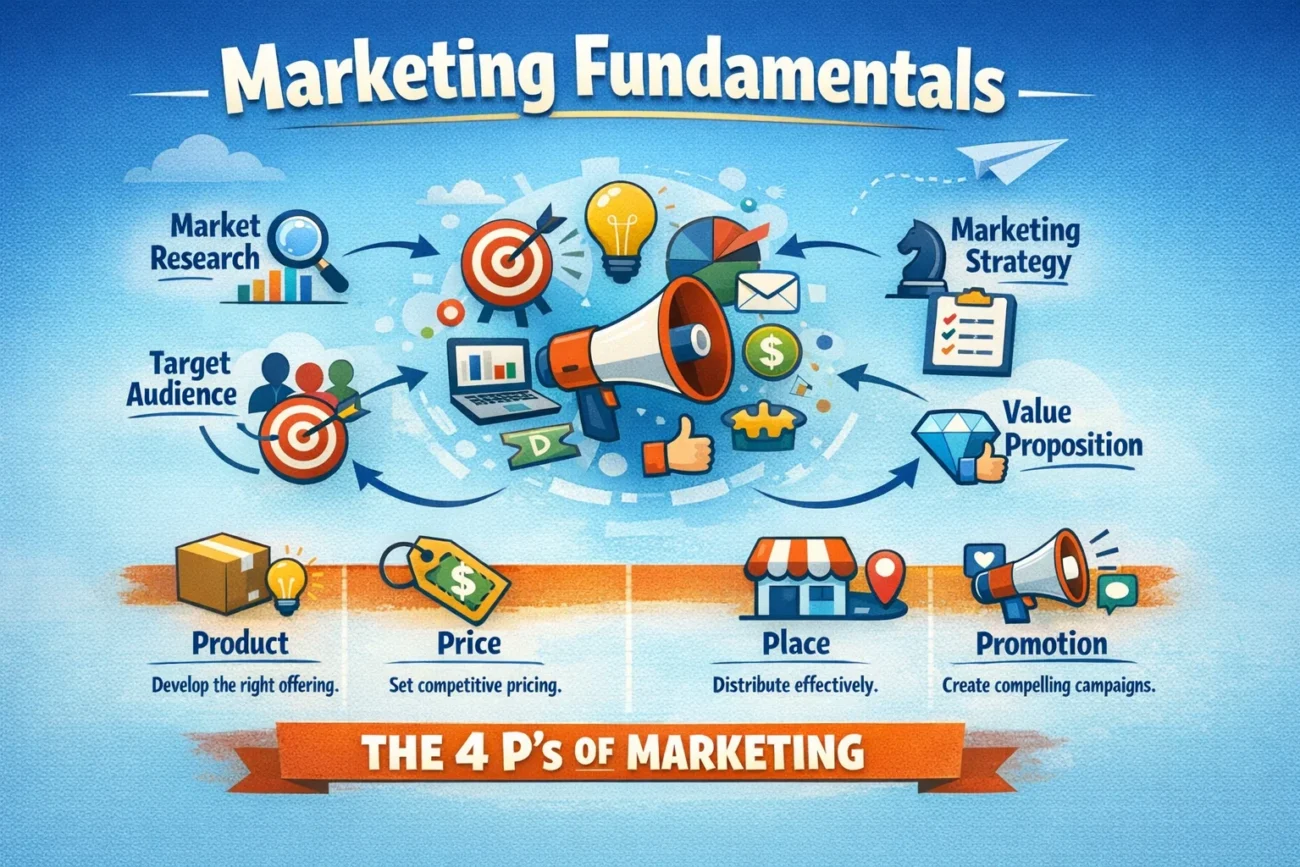
The Marketing Fundamentals mix, commonly known as the 4Ps—Product, Price, Place, and Promotion—represents the tactical tools businesses use to implement their marketing strategies. Product refers to the goods or services offered to meet customer needs. Price determines the value customers are willing to pay. Place involves distribution channels that make products accessible to customers. Promotion includes advertising, public relations, social media marketing, and sales promotions used to communicate with the target audience. A balanced marketing mix ensures that all elements work together to deliver a consistent and compelling customer experience.
Product Strategy and Branding
A strong product strategy is vital for business success. It involves product development, innovation, quality management, and lifecycle planning. Every product goes through stages such as introduction, growth, maturity, and decline. Understanding the product lifecycle helps businesses adjust marketing strategies accordingly. Branding is another fundamental aspect that influences customer perception. A powerful brand identity includes a memorable name, logo, tagline, and consistent messaging. Branding builds emotional connections with customers and enhances brand recognition. Companies that invest in strong branding often enjoy higher customer trust and loyalty.
Pricing Strategies and Revenue Optimization
Pricing is a strategic decision that directly impacts profitability and brand positioning. Different pricing strategies include cost-based pricing, value-based pricing, competitive pricing, and penetration pricing. Value-based pricing focuses on the perceived value to the customer rather than production cost alone. Competitive pricing considers market competition to remain attractive. Psychological pricing techniques, such as setting prices at $9.99 instead of $10, can also influence purchasing behavior. Businesses must carefully analyze market conditions and customer expectations to set prices that maximize revenue while maintaining competitiveness.
Distribution Channels and Place Strategy
Distribution plays a crucial role in ensuring that products reach customers efficiently. Businesses can choose between direct and indirect distribution channels. Direct channels involve selling directly to consumers through websites or physical stores, while indirect channels include wholesalers, retailers, and distributors. In the digital era, e-commerce platforms have transformed distribution strategies by enabling global reach. Effective place strategy ensures product availability at the right time and location, enhancing customer convenience and satisfaction.
Promotion and Integrated Marketing Communications
Promotion is about communicating value to customers and persuading them to take action. Integrated Marketing Fundamentals communications (IMC) ensure that all promotional efforts deliver a consistent message across different channels. Traditional advertising methods include television, radio, and print media, while digital marketing includes social media marketing, email marketing, search engine optimization (SEO), and content marketing. Businesses must select promotional channels that align with their target audience’s preferences. Clear, compelling, and customer-focused messaging increases brand visibility and drives engagement.
Digital Marketing and Modern Trends
Digital marketing has become an essential component of Marketing Fundamentals. With the rise of the internet and social media platforms, businesses can connect with customers in real time. Search engine optimization improves website visibility on search engines, while content marketing provides valuable information to attract and retain audiences. Social media marketing builds brand awareness and fosters customer interaction. Data analytics tools allow businesses to track campaign performance and make data-driven decisions. Staying updated with digital marketing trends ensures businesses remain competitive in a rapidly evolving market environment.
Relationship Marketing and Customer Retention
Acquiring new customers is important, but retaining existing customers is often more cost-effective. Relationship Marketing Fundamentals focuses on building long-term customer relationships through personalized communication, loyalty programs, and exceptional customer service. Businesses that prioritize customer retention benefit from repeat purchases and increased customer lifetime value. Trust, transparency, and responsiveness are key elements of strong customer relationships. By consistently delivering value and engaging customers, companies can foster brand loyalty and sustainable growth.
The Role of Marketing Ethics and Social Responsibility
Ethical Marketing Fundamentals practices build credibility and trust. Businesses must ensure honesty in advertising, respect customer privacy, and avoid misleading claims. Social responsibility also plays a significant role in modern marketing. Consumers increasingly prefer brands that support environmental sustainability and social causes. Companies that demonstrate corporate social responsibility strengthen their reputation and appeal to socially conscious customers. Ethical marketing not only protects brand integrity but also contributes to long-term success.
Conclusion
Marketing Fundamentals provide a structured approach to understanding markets, creating value, and building meaningful customer relationships. By mastering core principles such as market research, segmentation, branding, pricing, distribution, and promotion, businesses can develop effective strategies that drive growth and profitability. In a competitive business environment, companies that consistently apply marketing fundamentals gain a strategic advantage. Whether operating locally or globally, understanding and implementing these essential marketing concepts ensures long-term success and sustainable brand development.