Introduction to how many creases are there in cricket?
Cricket is a game of precision, discipline, and clearly defined boundaries. Among the most important markings on a cricket field are the creases. If you have ever wondered, how many creases are there in cricket? the simple answer is that there are four creases marked at each end of the pitch, making a total of eight creases on the full pitch. However, understanding their purpose, placement, and importance gives deeper insight into how the game functions. Creases are not just lines on the ground; they define safe zones for batters, guide bowlers in delivering the ball legally, and assist umpires in making critical decisions such as run-outs, stumpings, and no-balls.
Total Number of Creases in Cricket
In a standard cricket field, the pitch has two ends. At each end of the pitch, there are four creases: one bowling crease, one popping crease, and two return creases. Since there are two ends, the total number becomes eight creases across the entire pitch. These creases are carefully measured and marked according to the official Laws of Cricket set by the Marylebone Cricket Club (MCC). Each crease serves a unique purpose in regulating gameplay.
The Bowling Crease Explained
The bowling crease is the horizontal line that runs through the center of the three stumps at each end of the pitch. It is typically at least 8 feet 8 inches (2.64 meters) on either side of the center of the middle stump, making it long enough to accommodate bowling actions from different angles. The bowling crease is essential because it marks the line behind which the bowler must deliver the ball. If the bowler steps beyond certain limits in relation to the popping crease while delivering, it may result in a no-ball.
This crease also helps define whether a batter is safely inside their ground. During close run-out decisions, the position of the bat or body in relation to the bowling crease and popping crease becomes crucial.
The Popping Crease and Its Importance
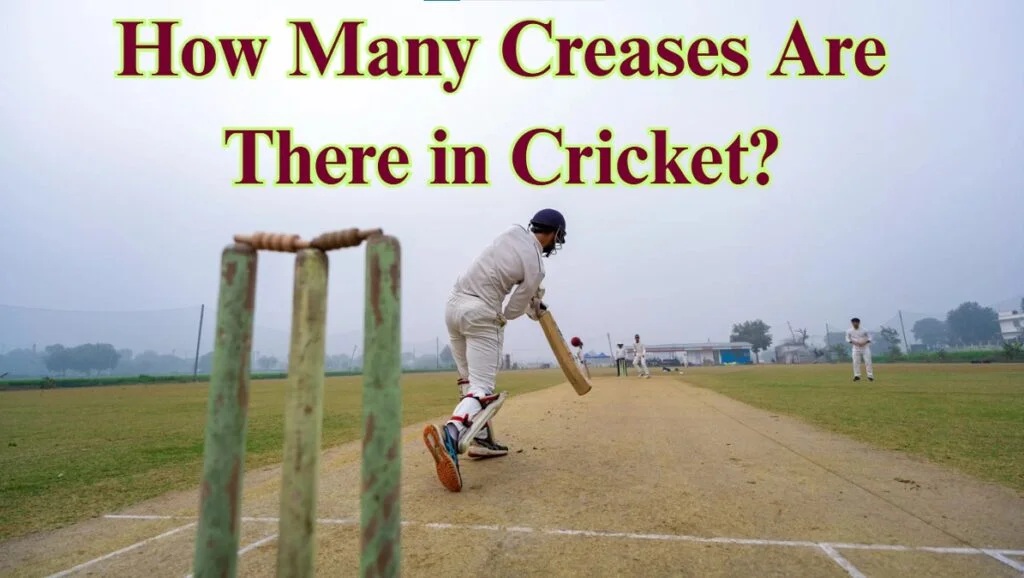 The popping How Many Creases Are There in Cricket? is drawn parallel to the bowling crease and is positioned 4 feet (1.22 meters) in front of it. This is one of the most important lines in cricket. For batters, the popping crease represents safety. If any part of the bat or body is grounded behind this line while attempting a run, the batter is considered “in their ground.”
For bowlers, the popping crease determines the legality of their front foot during delivery. If the bowler’s front foot lands beyond the popping crease without any part behind the line, the umpire calls a no-ball. This rule ensures fairness and prevents bowlers from gaining an unfair advantage by bowling too close to the batter.
The Return Crease Defined
The return creases are drawn perpendicular to the bowling and popping creases. There are two return creases at each end, one on either side of the pitch. They extend at least 8 feet 8 inches behind the popping crease.
how many creases are there in cricket? are particularly important for bowlers. The bowler’s back foot must land within the return crease lines during delivery. If the back foot touches or crosses outside the return crease, the umpire will call a no-ball. This rule ensures that bowlers do not deliver the ball from an unfair angle.
Why Creases Matter in Cricket
Creases play a central role in maintaining fairness and structure how many creases are there in cricket?. Without clearly marked creases, it would be nearly impossible to judge safe runs, stumpings, and legal deliveries accurately. Umpires rely heavily on crease markings to make split-second decisions that can change the outcome of a match.
Modern technology such as third umpires and slow-motion replays further highlight the importance of creases. Even a fraction of a bat grounded behind the popping crease can mean the difference between being out and not out.
Creases and Run-Out Decisions
One of the most dramatic moments how many creases are there in cricket? is a run-out decision. When batters attempt quick runs between the wickets, they must ensure some part of their bat or body is grounded behind the popping crease. If the fielding side breaks the stumps before the batter reaches this safe zone, the batter is declared out.
This is why players are trained to slide their bats along the ground while completing a run. The crease line becomes the ultimate judge of safety.
Creases and No-Balls
No-balls are often decided based on crease violations. If the bowler’s front foot crosses the popping crease or if the back foot lands outside the return crease, it results in a no-ball. In limited-overs cricket, this can be costly as it gives the batting team an extra run and sometimes a free hit.
Thus, bowlers must carefully control their run-up and delivery stride to avoid overstepping. The crease acts as a boundary that ensures fair play.
Historical Evolution of Creases
In early forms of cricket, crease markings were not as standardized as they are today. Over time, with the formalization of the Laws of Cricket, exact measurements were introduced to ensure uniformity across international and domestic matches. Today, every professional cricket ground follows strict guidelines for marking creases accurately.
The modernization of the game, including advanced pitch preparation and field markings, has further emphasized the significance of crease dimensions.
Difference Between Creases and Pitch Lines
Many beginners confuse crease lines with other pitch markings. While the pitch has various lines, such as the protected area markings, only the bowling crease, popping crease, and return creases are officially considered creases. These lines are directly involved in gameplay decisions and legal regulations.
Understanding this distinction helps new fans and players grasp the technical aspects of cricket more effectively.
Role of Creases in Different Formats
Whether it is Test cricket, One Day Internationals (ODIs), or T20 matches, the number and measurements of creases remain the same. However, the consequences of crossing a crease may vary depending on match format rules. For example, in T20 cricket, a no-ball often results in a free hit, making crease discipline even more crucial for bowlers.
Thus, while the total number of creases does not change, their strategic importance can increase in shorter formats.
Conclusion: Final Answer to How Many Creases Are There in Cricket?
To summarize clearly, there are four creases at each end of a cricket pitch: one bowling crease, one popping crease, and two return creases. Since a cricket pitch has two ends, the total number of creases on the pitch is eight. Each crease serves a distinct and vital function, from defining safe zones for batters to ensuring legal deliveries by bowlers. Understanding these creases enhances your knowledge of cricket and allows you to appreciate the fine margins that decide matches. Creases are not just simple white lines; they are the foundation of fair play and accurate decision-making in cricket.
You Many Also Read: India National Cricket Team vs Sri Lanka National Cricket Team Match Scorecard